
The Maritime Professional’s Guide to Cleaning, Rag Hygiene and Sanitisation
Running a tight ship in the shipping industry demands attention to every detail, especially the cleaning supplies. Let’s talk straight: the humble rag for cleaning doesn’t get enough respect. Grease, oil, seawater, dust, and ships see all sorts of messes. If we want a safe space for crew and cargo, cleaning rag hygiene cannot be ignored. At Sam’s Industrial Wiper Rags, we’ve seen how sanitising those well-used rags keeps your operation on track.
Who’s Using It and Why Does It Matter?
The crew, engineers, deckhands, mechanics, they all grab a rag for cleaning at some point. One minute it’s wiping fuel, the next it’s cleaning a countertop. Bacteria don’t care where they land. Without regular sanitising, a rag for cleaning might just move grime from one spot to another. Worse, leftover oil and chemicals can even damage surfaces or harm people. Making this process routine not only protects your crew but extends the life of every cleaning rag you own.
What Works Best for Cleaning Rag Sanitation?
Our team is big on practical steps and proven methods. Industrial shipping environments need solutions that aren’t time-wasting or delicate. Here is our recommended plan:
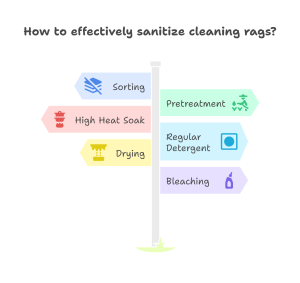
- Sorting Matters: Never mix rags used for machinery (grease, oil) with those used in galleys or living quarters. This prevents cross-contamination.
- Pretreatment: For heavy grime, soak rags in hot water with dish soap or a touch of white vinegar. Vinegar works wonders as a natural cleaner and cuts through stubborn grease.
- High Heat Soak: Boil rags for 15-20 minutes. This helps kill off bacteria, mildew, and whatever else the ocean air brings along.
- Regular Detergent: Wash rags using hot water and standard laundry detergent. Fabric softeners or dryer sheets aren’t your friends, skip them. Softener can trap residue, dulling your cleaning rag’s power.
- Drying: Always dry cleaning rags on high heat or in direct sun if you’re docked. Heat helps finish off the germs and speeds things up.
- Bleaching: Every few washes, if you’re dealing with white or light rags, a little bleach can boost your sanitising routine without harming the fabric.
Key Points for Your Cleaning Rag Routine
- Replace rags when they get thin or don’t absorb well. If they start to smell even after washing, it’s time for a new one.
- Store clean rags in sealed bins. This keeps them ready for the next dirty job and away from new contaminants.
Shortcuts and Pitfalls
Cutting corners, a rag rinsed under cold water and slapped on a hook, won’t cut it. Skipping the hot wash and dry cycle can keep bacteria hiding deep in the fibres. Ever see a rag get stiff or smell off? That’s your warning sign.
Your rag for cleaning is only as good as the care you give it. At Sam’s Industrial Wiper Rags, we help you keep every cleaning rag in its best shape, whether you’re shipping goods across oceans or just keeping things tight on deck. Need a bulk order for the whole fleet? We’ve got you covered with rags manufactured for big messes and fast turnover.
Robust, reliable, ready whenever you are—that’s how we make cleaning rags for the shipping industry.
Related Posts

Could Australia’s Circular Economy Make the Cleaning Rag More Valuable Than Ever?
Industrial cleaning has been treated as a routine expense for decades. Wipes get used, binned,…Read more

Why a Bag of Rags Remains Essential for Workshops and Factories
Spend enough time in a workshop or on a factory floor, and you stop questioning…Read more

Behind the Glass: The Hidden Science of Rags and Spotless Windows
Rags for cleaning glass don’t get much limelight. People often think any old cloth will…Read more

Why Industrial Workers Rely on Cleaning Rags for Every Task?
In a fast-paced industrial environment, keeping workspaces, tools, and machinery clean is essential. Workers need…Read more

Unraveling The Diverse World Of Industrial Wipes
In the bustling realm of industries, where productivity meets precision, there exists a silent hero.…Read more

Discover the Magic of Cotton Cleaning Rags
With Sam’s rag for cleaning, embrace the custom of cleanliness and learn about the magic…Read more